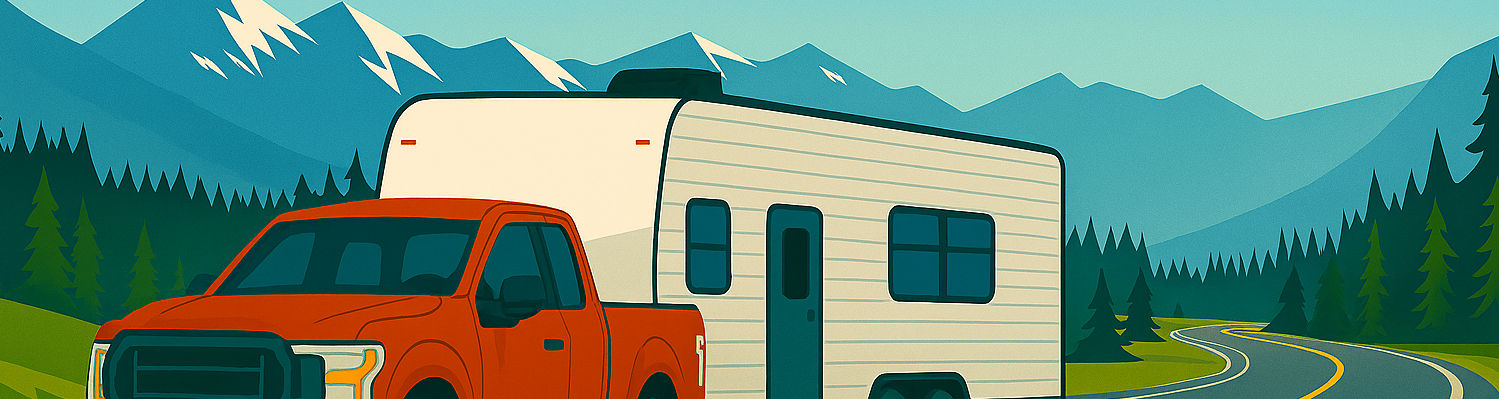
We set out with the noble intention of an early departure and still managed to roll away at 9:30, fortified by breakfast and the mandatory morning coffee.
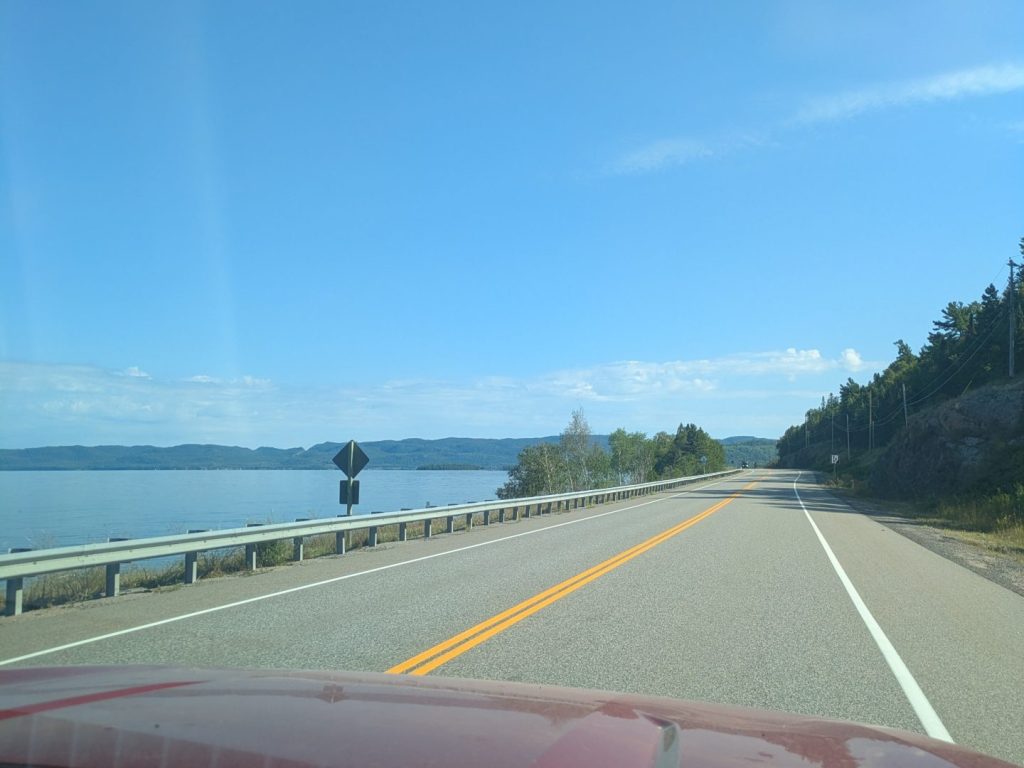
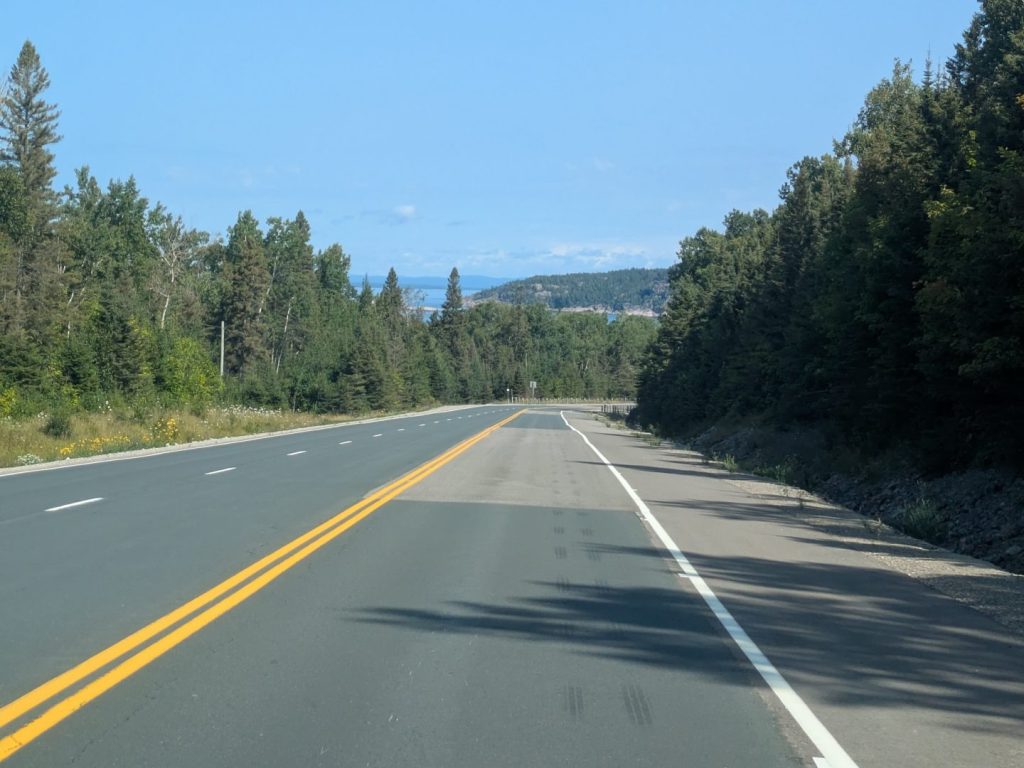
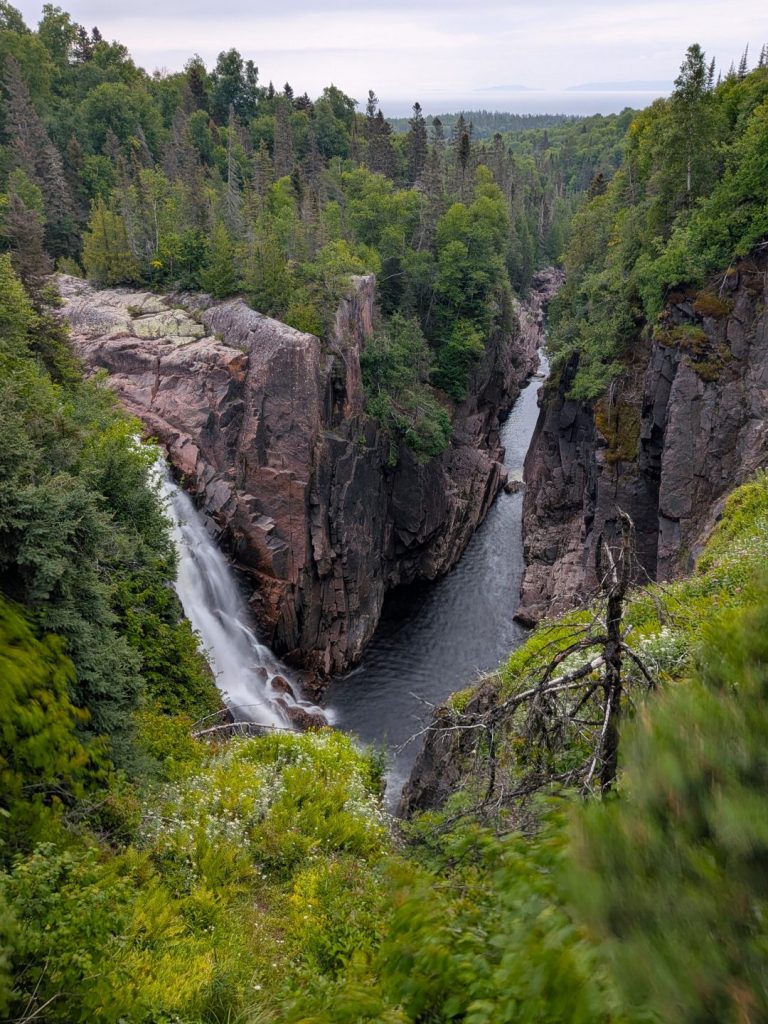
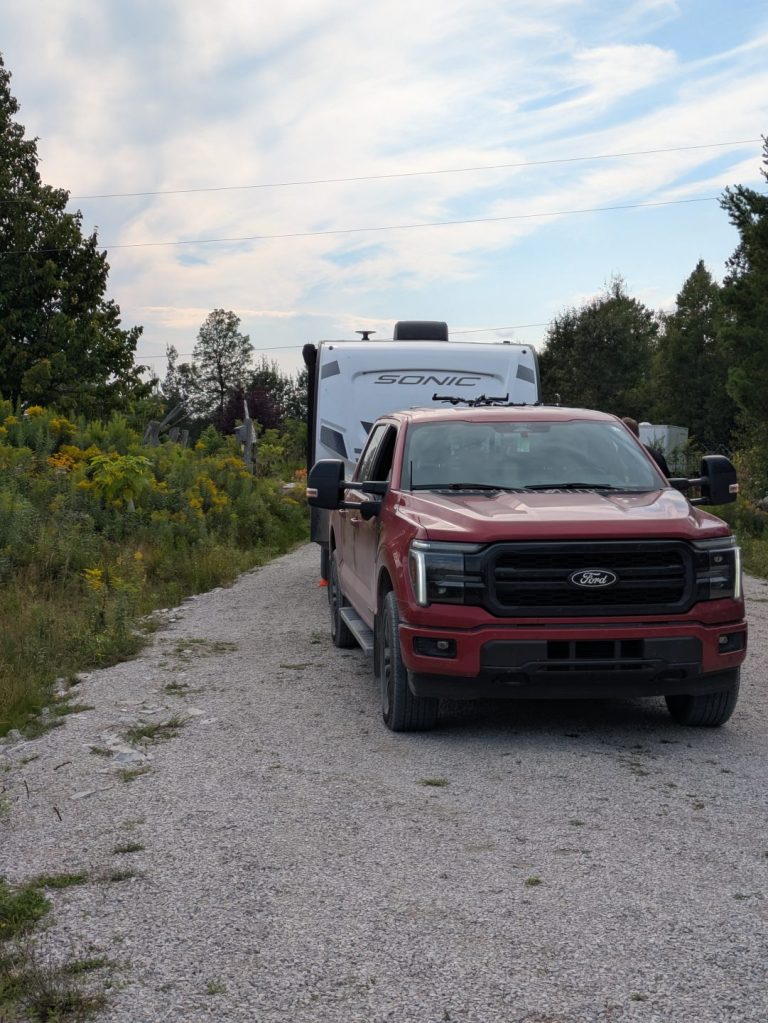
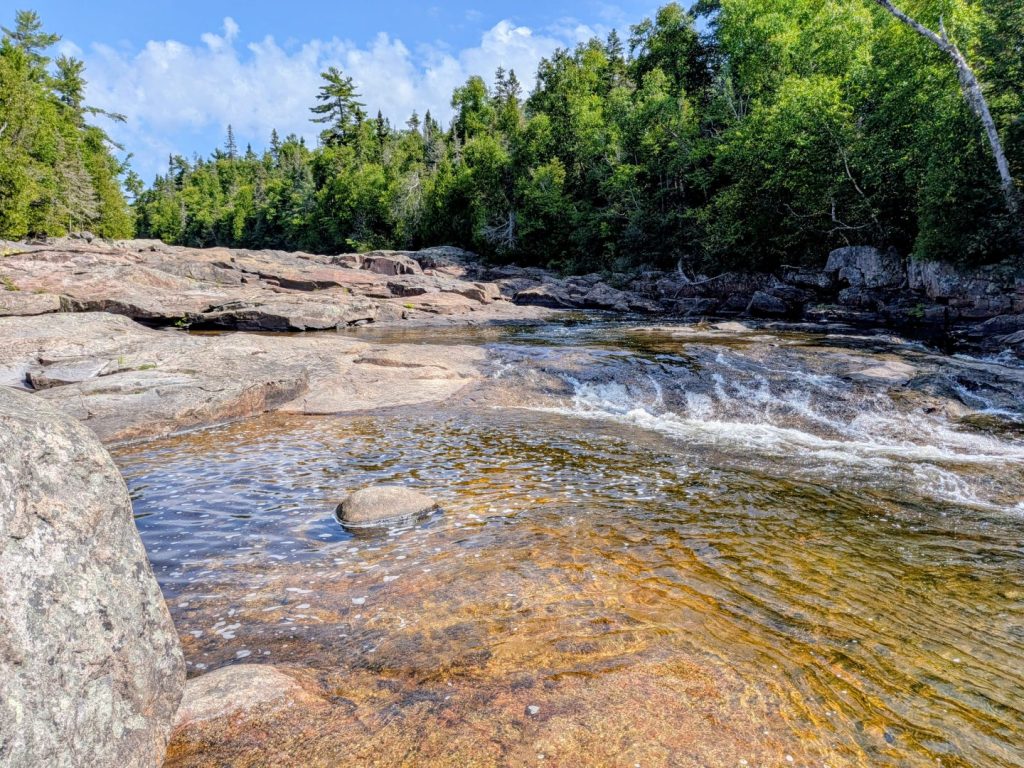
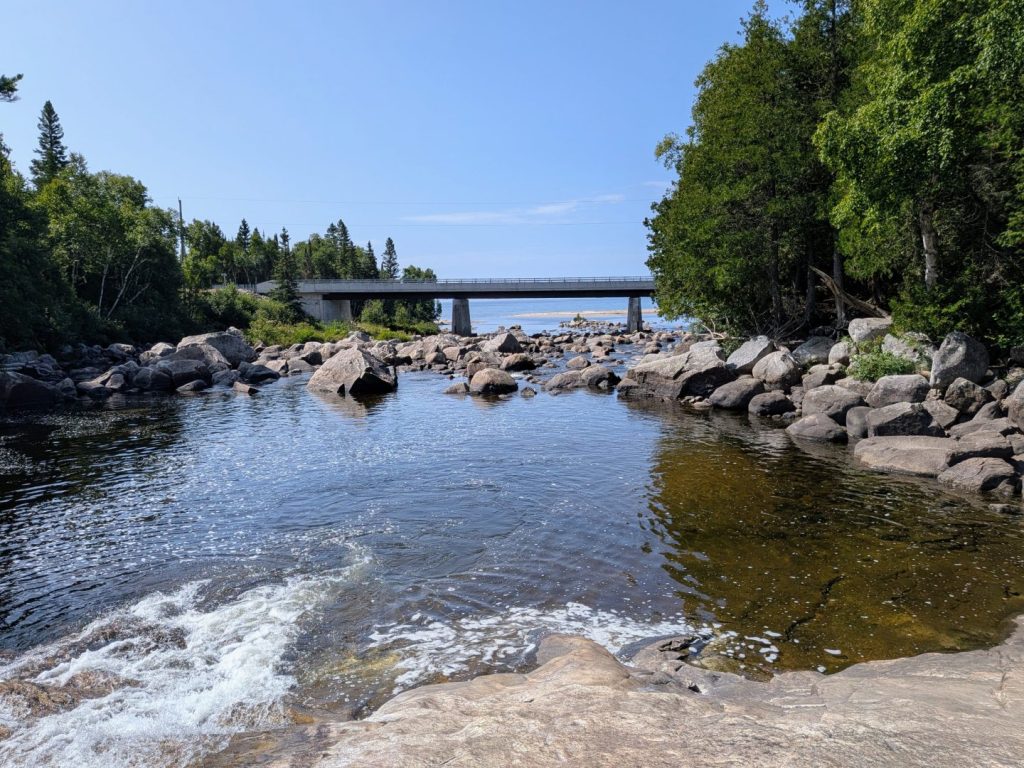
Sand River Falls was our first stop. It was well signed from the highway, and the access road disappeared into the woods on a rough but asphalted stretch. The real challenge came at the parking lot, which was clearly never designed with a truck and trailer in mind. By sheer luck a disabled spot in the corner was free, giving me just enough room to reverse the trailer in and pivot around. Without that spare space, we might still be there waiting for the last car to leave. It’s been a recurring theme on this trip: you spot an interesting stop, pull in, and immediately realize the trailer makes it impossible to access. Alberta really spoils you — nearly every attraction has parking that actually anticipates larger vehicles. As it was, we were partially blocking the entrance, so our visit to the falls was a brisk five‑minute dash.
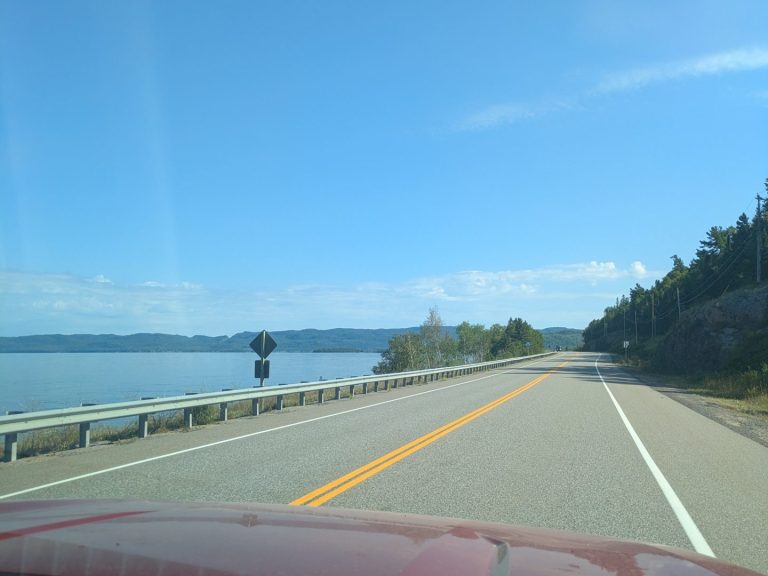
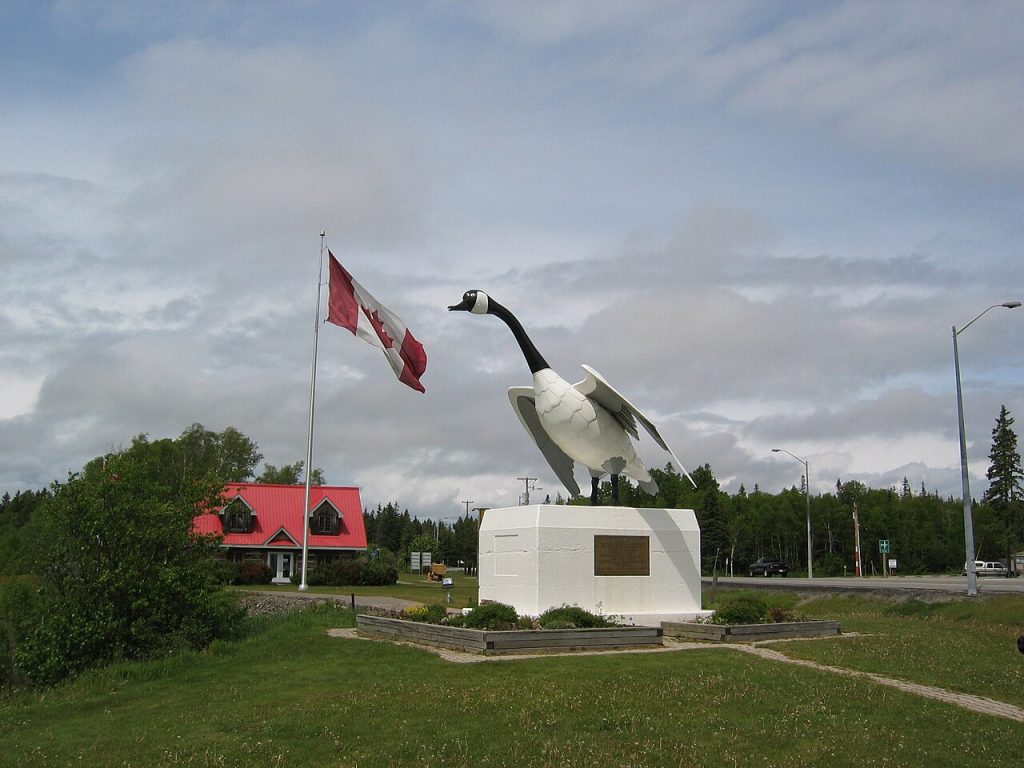
From there we headed to Wawa — not just for its excellent name or its 8.5‑metre metal Canada goose, but because it was the only grocery store for miles. Once provisioned, we carried on to Neys Provincial Park.
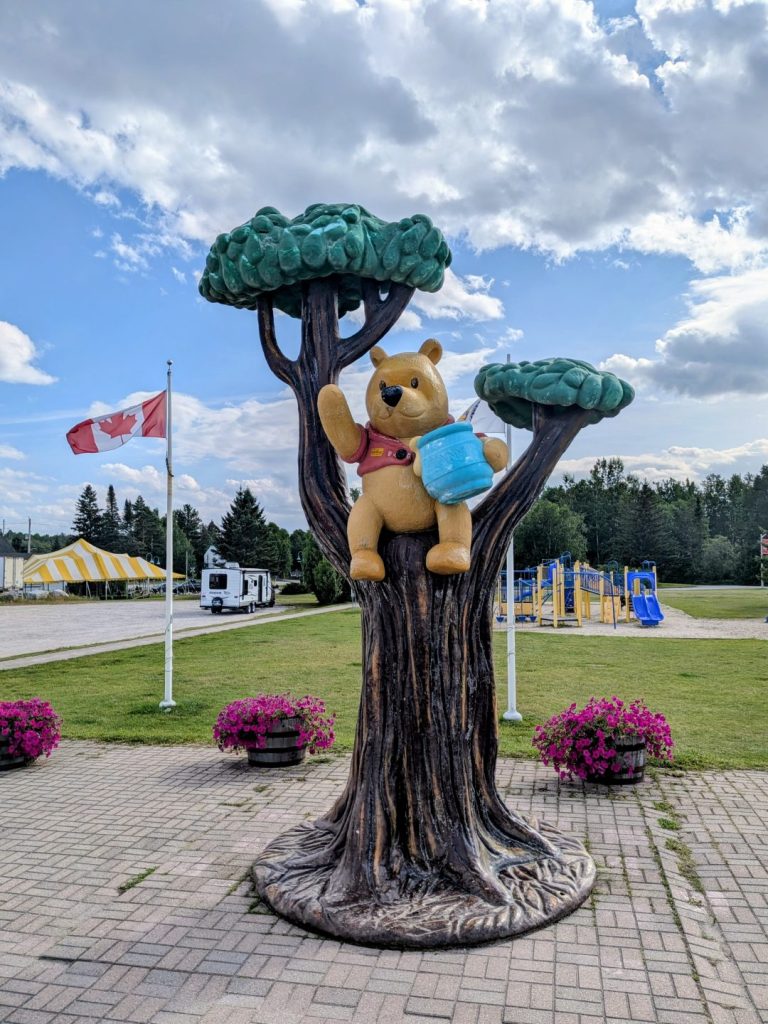
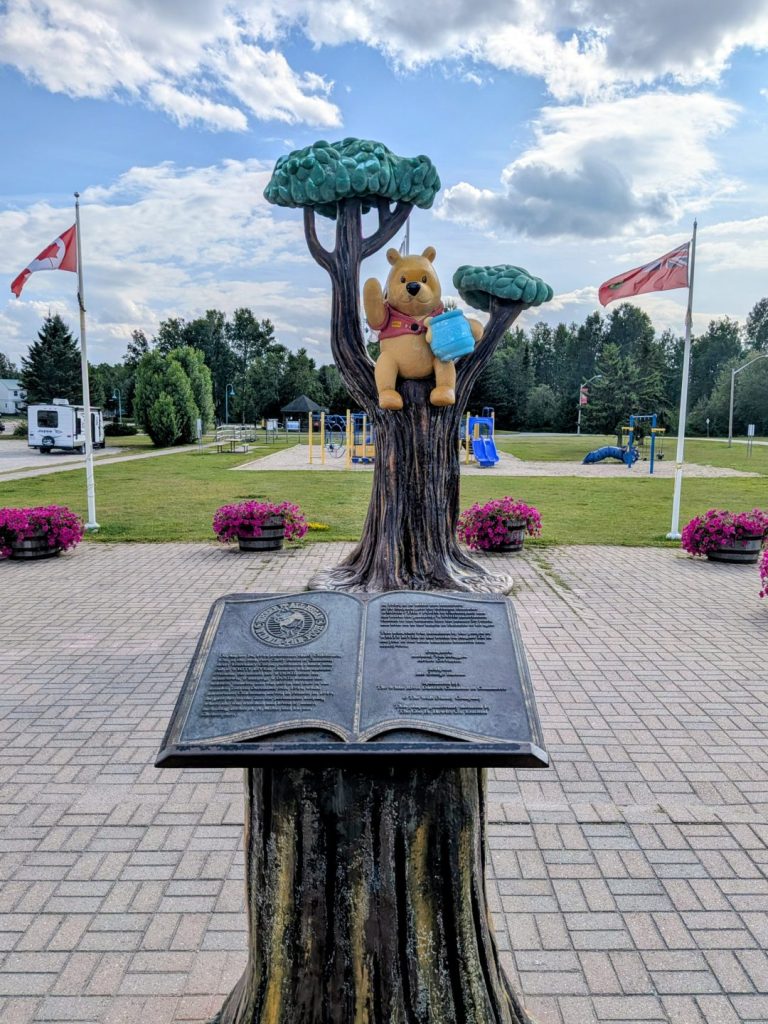
As it happens, the road carried us straight through White River, a town that proudly proclaims itself the Home of Winnie the Pooh. This immediately caught our attention — we both grew up with the stories in England, where Winnie is forever linked in our minds with Wittenham Clumps in Oxfordshire.
The story goes like this :-
“Winnie-the-Pooh’s story begins in White River, Ontario—a railroad town deep in the forest. On August 24, 1914, its small population swelled with soldiers for a few hours during a Canadian Pacific train stopover. Great Britain had entered the First World War earlier that month, and many Canadians answered the call to volunteer. Among the first was Harry Colebourn, a 27-year-old veterinarian from Winnipeg who was travelling with other members of the Canadian Expeditionary Force for six weeks of training at Camp Valcartier in Quebec. Their train stopped to resupply in White River, and Colebourn disembarked with the other men to explore the town.
Most of what we know about his stopover comes from the few words scrawled in his day planner: “Left Pt. Arthur 7A.M. Train all day, Bought Bear $20.” Buying a bear during a layover might sound odd, especially when one realizes this is around $500 in today’s money. Yet regimental mascots were seen as good for morale, so when Colebourn saw a trapper selling a black bear cub, he may have felt it was his patriotic duty to buy it. He named it “Winnie” after Winnipeg.
A playful cub with a sweet tooth, Winnie was a favourite with the troops in Valcartier. In October, she and Colebourn crossed the Atlantic in a ship convoy bound for more training on England’s Salisbury Plain. When Colebourn was about to depart in early December for combat in France, he loaned Winnie to the London Zoo. She swiftly became a crowd favourite and continued to delight a generation of children after she was officially donated to the zoo at war’s end. One of these young admirers was Christopher Robin Milne.”
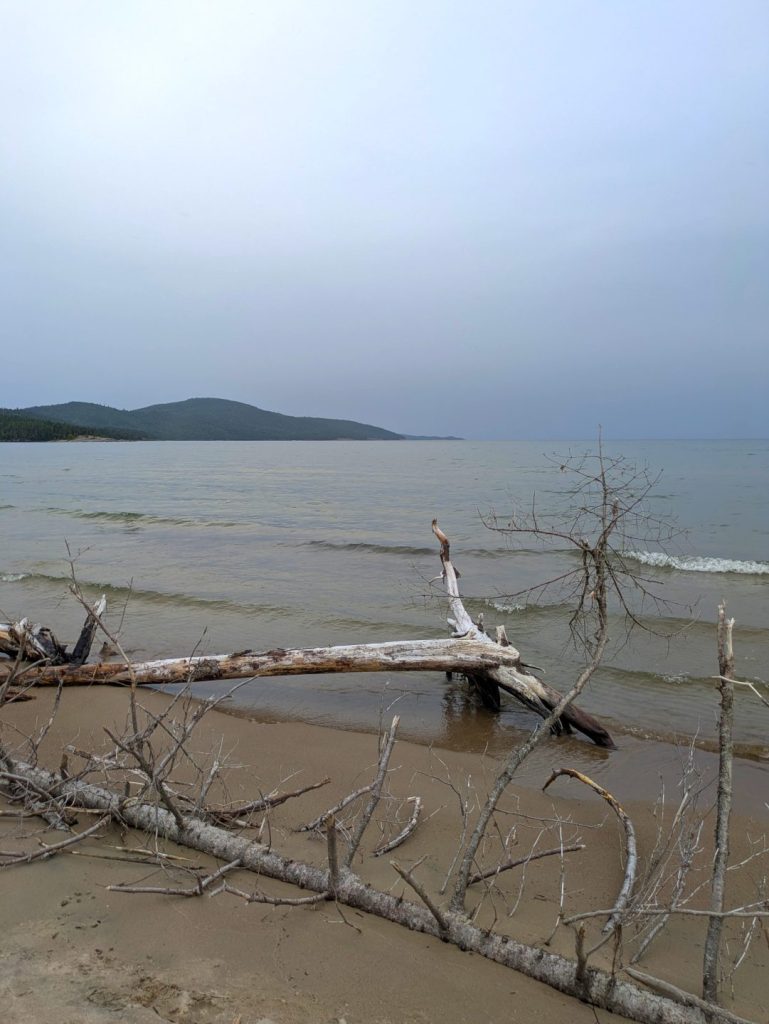
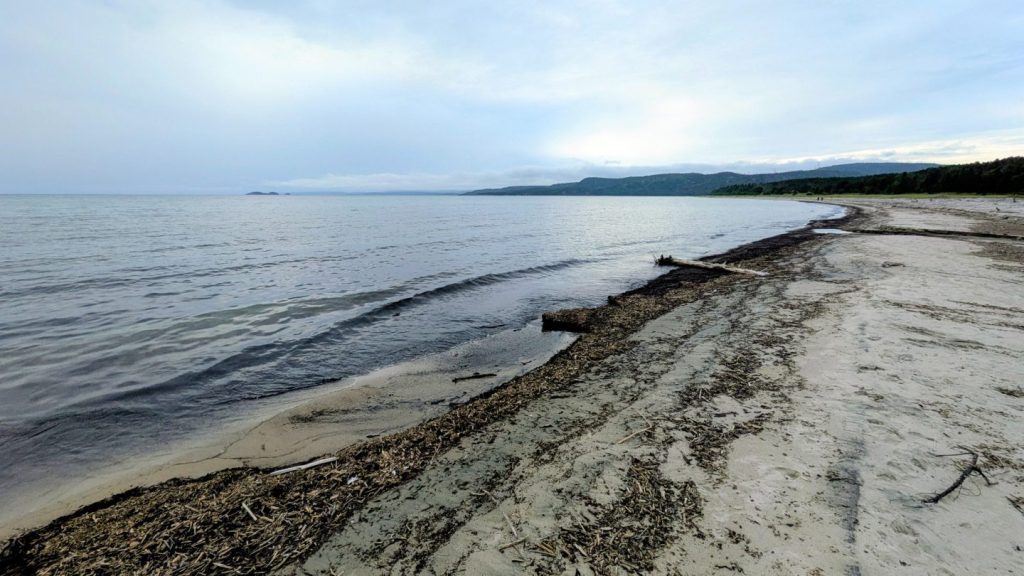
Neys sits right on the shore of Lake Superior, with campsites tucked behind the beach and views stretching out over the water.
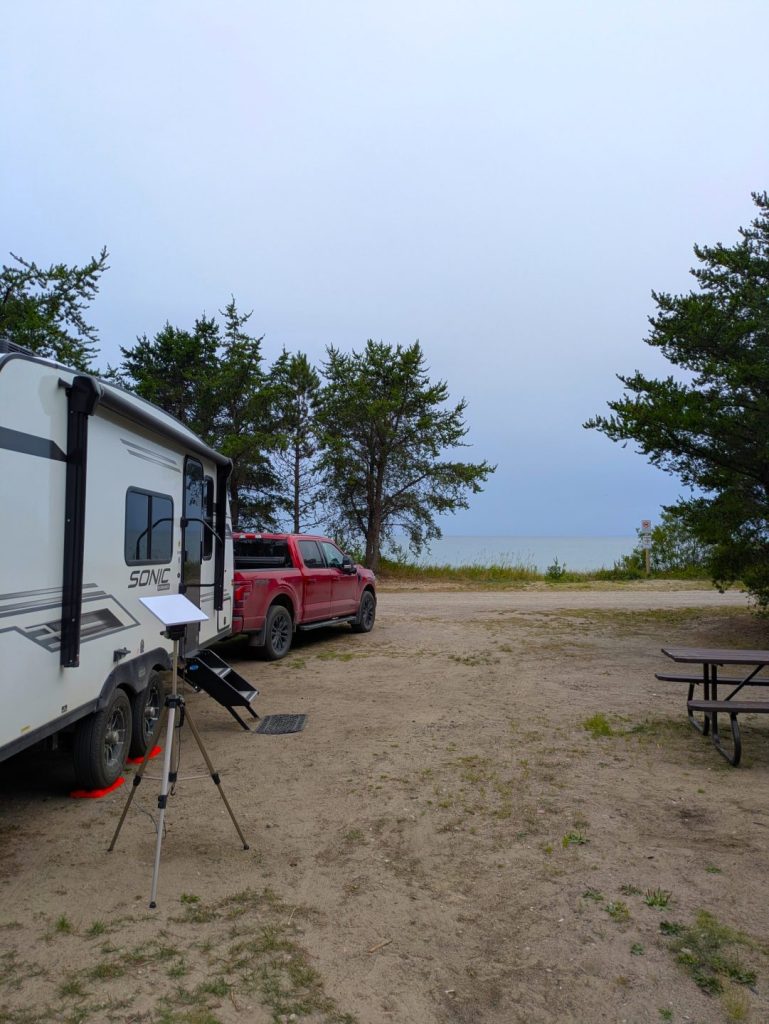
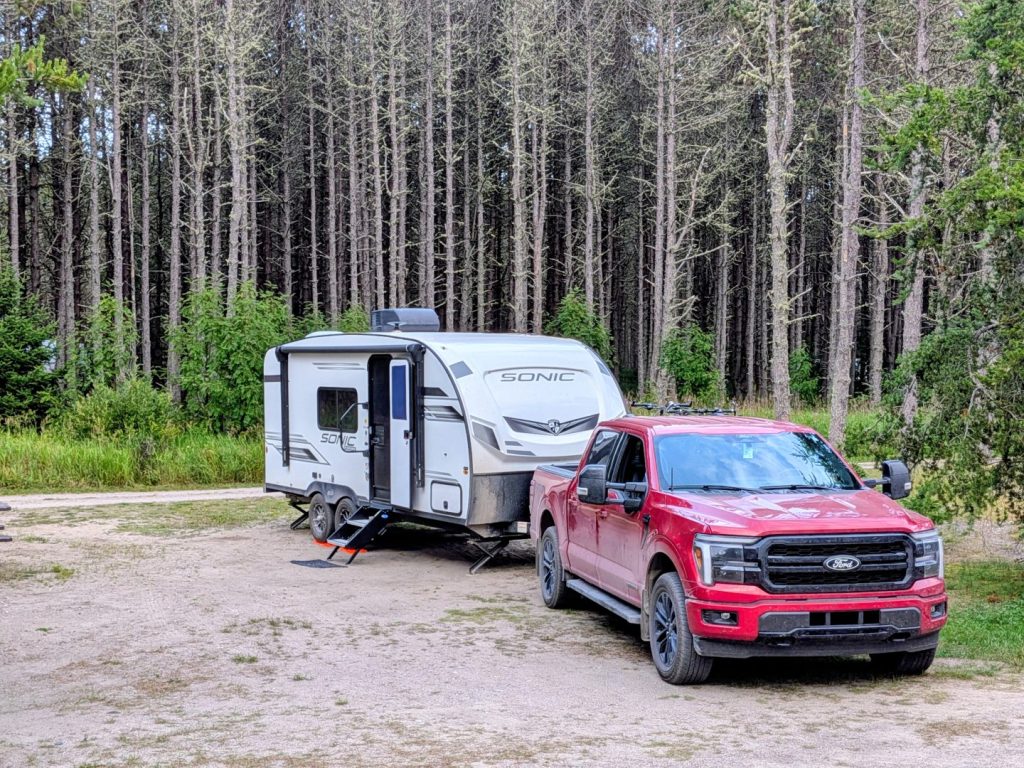
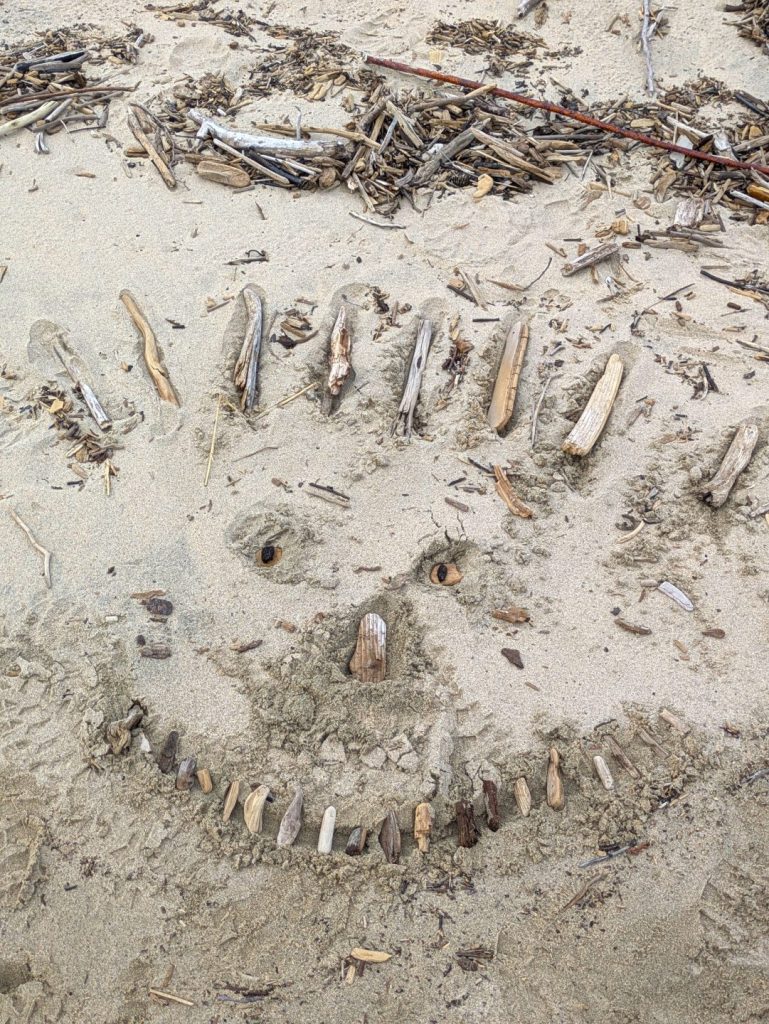
After settling in, we needed a leg stretch and chose the 1.3 km Dune Trail. The website promises a stroll through a “unique sand dune ecosystem,” but the entire loop wound through dense forest, and aside from the sandy trail surface there wasn’t a dune in sight. We finished the loop and wandered back along the beach instead, poking through the driftwood and even making a bit of sand art before heading back to the trailer.
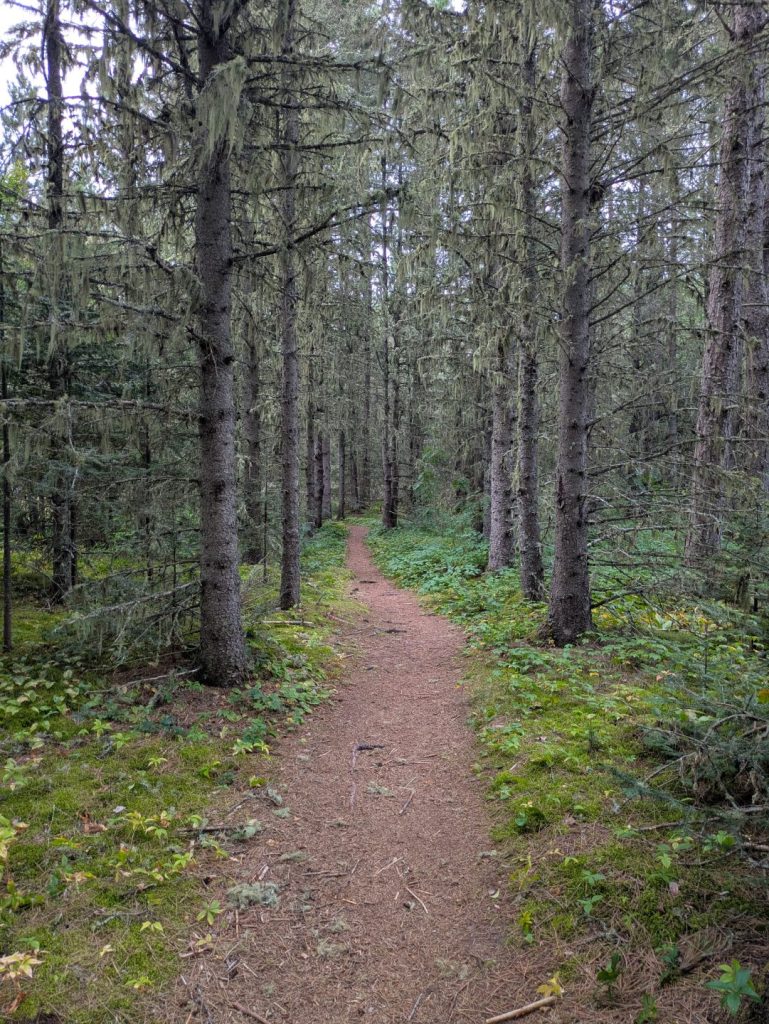
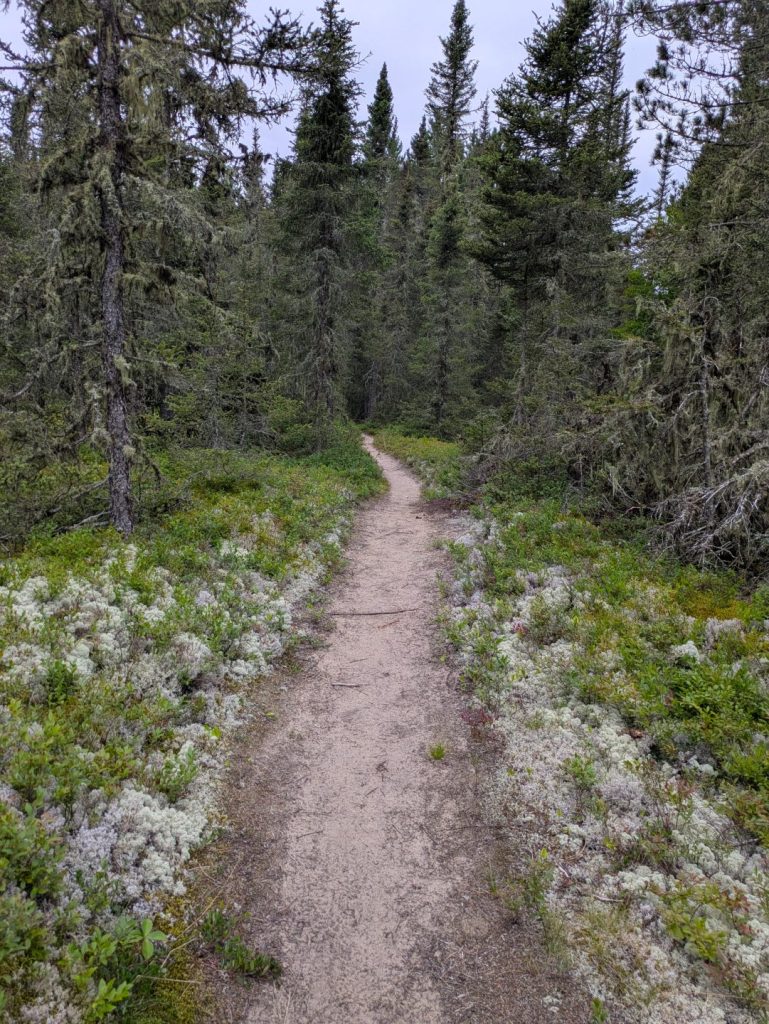
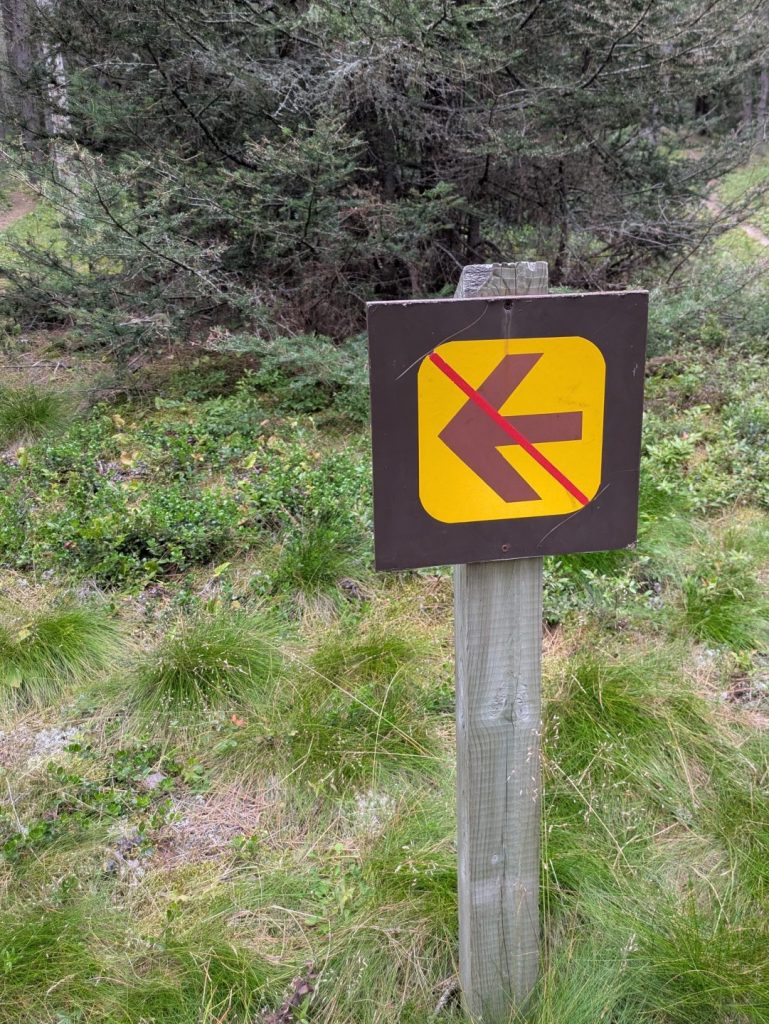
We’ve noticed that some parks aren’t nearly as well signposted as what we’re used to in Alberta. Case in point: at the start of the hike we ran into a sign so baffling we had no idea what it was trying to tell us. Honestly, wouldn’t a simple arrow pointing right have done the job?
About the Author