After tent camping for just a few nights in Cypress Hills (Cypress Hills Provincial Park | Alberta Parks) it became painfully obvious that we were just too old to be tenting it across Canada.
This started us down the route of “well if we don’t tent camp then what could we do?”.
Option A – using hotels but considering we are talking about 60 plus days and an average of $200 a night (cheaper in small towns but more in big cities) this would cost us a minimum of $12,000. Not to mention that every meal would likely be eating out and that would easily add another $4000 to $5000 to the trip.
Option B – Take a small travel trailer or pop-up trailer with us. We had previously owned a nice little Fleetwood Yuma pop-up that we had done a lot of camping in when the kids were younger, although we got rid when the kids got too big for the beds. We could get another one but we had also downsized vehicles to two small cars and would need to upgrade one to allow us to tow.
Option C – Although we had enjoyed the pop-up it did mean that every time you arrived at a site there was quite a bit of work to get setup and ready to sleep. Also the fridge was tiny and would not hold a lot of supplies which means that lunches would have to be bought out as getting to the fridge when in travel mode was hopeless. So the idea of a small solid sided travel trailer became an option. This would allow us to have the luxury of the bed being always ready so setup was minimal. The fridge was full sized and accessible while travelling. Big bonus was you had access to a toilet on the go.
So followed several weekends of visiting every trailer dealership within striking distance of Calgary. We sat/lay in hundreds of different trailers and started to form an opinion on what were the key features we really felt we needed. (Another post on that to come soon).
When it comes to towing there are so many numbers to consider: “Dry Weight”, “GVWR”, “Tow Capacity”, “Tongue Weight”, etc. Now if you already own the tow vehicle then many of these are set for you and your choice of trailers becomes easier. In our case we were looking at getting the tow vehicle and trailer together.
I started down the route of an SUV and towing a smaller trailer or an ultralight but the ones we liked still came in around 6000lbs tow capacity needed. Many modern SUVs have now had their tow capacity reduced or removed as the manufacturers are not targeting that market. Some of the SUVs we considered like the Ford Expedition, Toyota Sequoia, Toyota 4Runner, etc. maxed out around the 6000lbs tow capacity. Now the general rule is that you should only tow 80% of your tow capacity as a maximum. Therefore these are only good for towing a 4800lbs trailer.
So we ended up looking at trucks Ford, GMC, Chevrolet, Toyota just to get a bigger towing capacity so that handling a GVWR trailer of 6000lbs would be not strain the vehicle. Although a truck solves the problems and gives us the choice of trailers we want it is a major outlay, coupled with the fact that I have never owned a vehicle that big before!
So now we enter the loop of “Lets just do it by car that we already own but buy cot beds to go in the tent and better mattress pads and better sleeping bags and…” to “Lets just get another pop-up and tow it behind an SUV but wait we need to buy an SUV and it will cost nearly the same as a truck” to “Lets get the truck and take the trailer we want but we will only tow for a small number of days and now we have a gas guzzling truck to keep” and around and around we went.
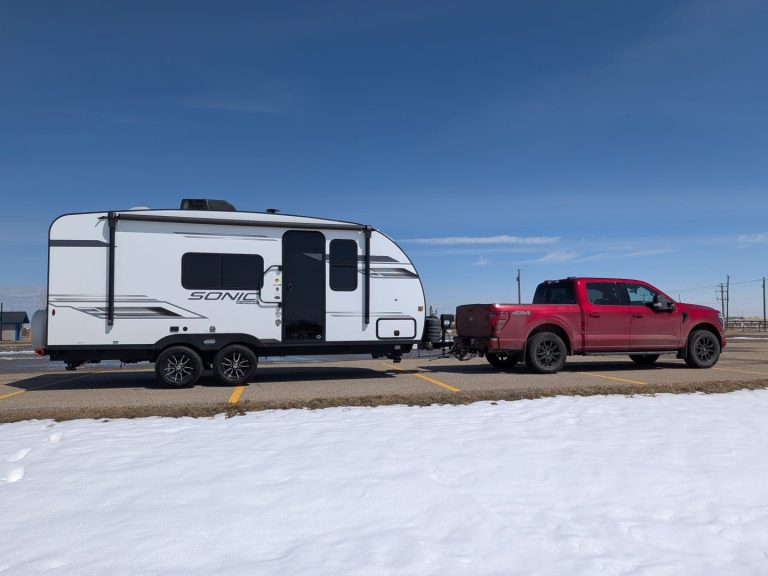
Eventually things like “Ford Employee Pricing” and coming by some money made the truck option come out on top. So we put the deposit on a Ford F-150 Lariat Hybrid with tow package…
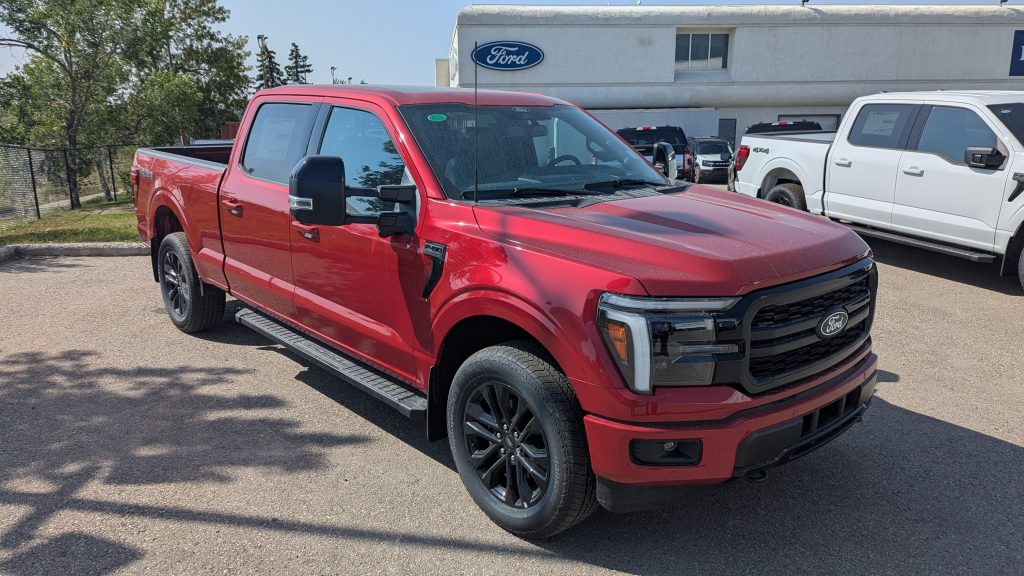
(Not this actual one but similar)
About the Author